The Updated Hacker manifesto ... "The Conscience of a Hacker"
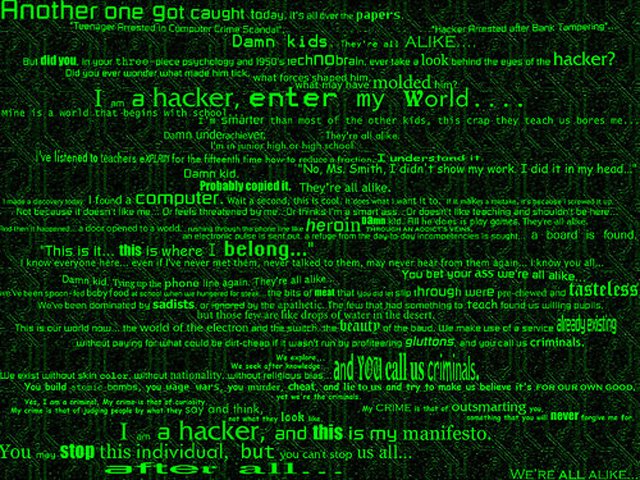
The Conscience of a Technologist (2026 Edition)
An homage inspired by “The Conscience of a Hacker” (1986)
Updated for 2026
They still call us criminals. They still don’t understand.
They see the headlines: breaches, leaks, ransomware, AI gone rogue. They lump curiosity together with malice, exploration with exploitation.
But that was never the point.
We are not defined by stolen data or broken systems. We are defined by questions.
How does this work? Why does it fail? Who controls it—and who is excluded?
In 1986, the frontier was phone lines and terminals glowing green in the dark. In 2026, the frontier is everywhere.
It’s in the cloud you never see. The algorithms deciding who gets hired. The data centers humming louder than cities. The AI models trained on the sum of human knowledge—and its biases.
This is our world now.
We were raised by the internet. Taught by open documentation, forums, source code, and failure logs. We learned that information wants to be understood, not hoarded. That security through obscurity is just fear with a budget.
We don’t believe authority should go unquestioned. We don’t believe systems should be trusted just because they’re expensive. We don’t believe curiosity is a crime.
Yes—we test boundaries. Yes—we break things. But we also fix them.
We build tools so others can learn faster. We disclose vulnerabilities so systems can become safer. We automate the boring so humans can think. We fight lock-in, dark patterns, and surveillance disguised as convenience.
They say: “You could misuse that.” We say: “Then let’s design it better.”
Because the real danger isn’t knowledge. It’s ignorance at scale.
In 2026, hacking isn’t about breaking into systems. It’s about understanding systems that already shape our lives.
It’s about asking why your data is collected by default. Why AI decisions aren’t explainable. Why infrastructure is fragile, centralized, and opaque. Why the people who build technology rarely get to decide how it’s used.
We are engineers. We are researchers. We are defenders, tinkerers, auditors, builders.
Some of us write code. Some analyze packets. Some reverse binaries. Some teach, document, and advocate.
We are not a single culture anymore. We are many.
But we share a belief:
That access to knowledge is power—and power should be accountable. That systems should be challenged before they’re trusted. That technology should serve people, not control them.
You may fear what you don’t understand. That hasn’t changed since 1986.
But the future isn’t built by fear. It’s built by those willing to look inside the machine and ask hard questions.
This is our conscience.
You can call us hackers if you want. We’ll keep learning anyway.