The Evolution of AI Computing Technology
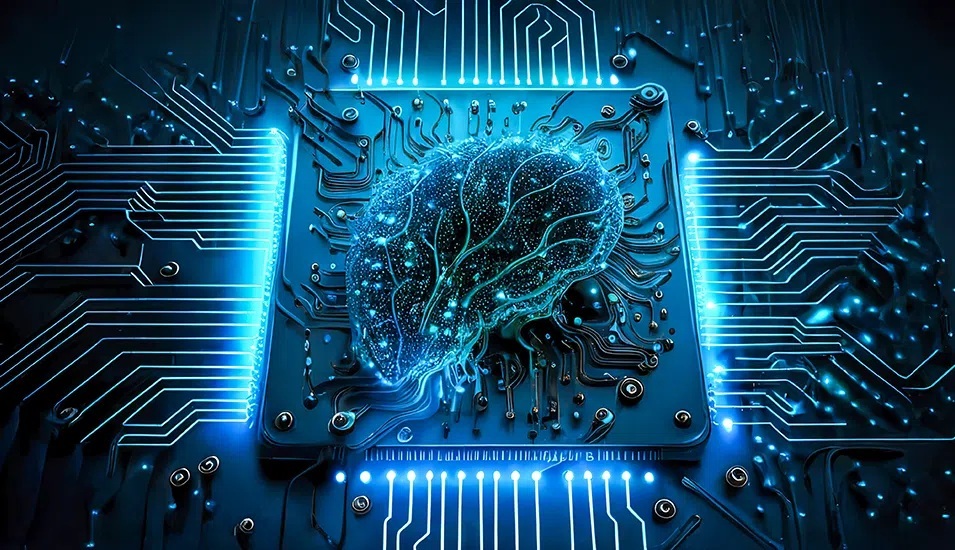
Artificial Intelligence (AI) computing technology has rapidly transformed from an academic curiosity into one of the most influential forces shaping modern computing. What once required entire research labs and supercomputers can now run on consumer hardware, cloud platforms, and even mobile devices. This shift is not just about smarter software—it’s about the evolution of the computing infrastructure that powers AI itself.
This article documents how AI computing works today, the technologies behind it, and why specialized hardware and software stacks are now essential to progress.
What Is AI Computing?
AI computing refers to the hardware, software, and architectural systems designed to efficiently process artificial intelligence workloads. These workloads include:
Machine learning (ML)
Deep learning (DL)
Natural language processing (NLP)
Computer vision
Reinforcement learning
Unlike traditional computing, which executes sequential instructions, AI computing focuses on massive parallelism, high-throughput data processing, and mathematical operations like matrix multiplication.
The Shift From General CPUs to Specialized Hardware
Early AI systems ran on general-purpose CPUs. While flexible, CPUs were not optimized for the dense mathematical operations required by neural networks. As AI models grew larger and more complex, performance bottlenecks became unavoidable.
This led to the rise of specialized hardware:
GPUs (Graphics Processing Units)
Originally built for rendering graphics, GPUs excel at parallel computation. Their architecture made them ideal for training neural networks, sparking the modern AI boom in the 2010s.
TPUs and AI Accelerators
Companies began designing custom silicon specifically for AI:
Tensor Processing Units (TPUs)
Neural Processing Units (NPUs)
AI inference accelerators
These chips prioritize speed, efficiency, and lower power consumption for AI tasks.
Edge AI Hardware
To reduce latency and bandwidth usage, AI computing moved closer to the data source:
Smart cameras
IoT devices
Mobile phones
Embedded systems
Edge AI allows real-time decision-making without relying on cloud servers.
The Software Stack Powering AI
AI computing is not just hardware—it’s a layered software ecosystem:
Frameworks: TensorFlow, PyTorch, JAX
Libraries: CUDA, ROCm, OpenCL
Model architectures: Transformers, CNNs, RNNs
Optimization tools: Quantization, pruning, mixed-precision training
Modern AI software abstracts hardware complexity while squeezing maximum performance from underlying systems.
Cloud AI and Data Centers
Cloud computing has become the backbone of AI scalability. Hyperscale data centers now deploy:
GPU clusters
High-speed interconnects (InfiniBand, NVLink)
Distributed training systems
Specialized cooling and power infrastructure
This enables organizations to train trillion-parameter models that would be impossible on local hardware.
Energy Efficiency and Sustainability
As AI models grow, so does their energy footprint. AI computing now prioritizes:
Performance per watt
Energy-efficient accelerators
Smarter scheduling and load balancing
Liquid cooling and advanced power management
Efficiency is becoming as important as raw performance.
The Future of AI Computing
Looking ahead, AI computing is expected to evolve in several key ways:
More specialized chips for inference and training
Increased use of edge and hybrid AI systems
Integration of AI directly into operating systems
Neuromorphic and brain-inspired computing research
Tighter hardware–software co-design
AI is no longer just software running on computers—it is reshaping what computers are built to do.
AI Computing: How We Taught Machines to Think (and Burn Through Silicon)
AI didn’t suddenly wake up one day and become “intelligent.” It crawled there slowly—through bad ideas, slow hardware, overheated GPUs, and a lot of people asking “why is this training run still not done?”
At its core, AI computing is about bending machines to do one thing really well: chew through insane amounts of data and math, fast. Everything else is just engineering details.
Let’s break down how we got here.
What “AI Computing” Really Means
Forget the buzzwords for a second.
AI computing is just:
Massive parallel math
Pattern recognition at scale
Systems designed to move data faster than your patience runs out
Instead of running neat, predictable instructions like classic software, AI workloads smash matrices together over and over until the model “figures something out.” That’s why normal CPUs tap out early.
Why CPUs Weren’t Enough
CPUs are great at doing a few things very well, very fast. AI needs to do millions of things at once, not one thing perfectly.
Early AI research ran on CPUs because that’s all there was. It worked… barely. Training took forever, models stayed small, and progress crawled.
Then someone realized:
“Hey, GPUs already do parallel math all day long. What if we abuse that?”
Everything changed.
GPUs: The Accidental AI Revolution
GPUs weren’t built for AI. They were built so games wouldn’t look terrible.
Turns out:
Parallel cores? Perfect.
High memory bandwidth? Even better.
Floating-point math? Exactly what neural networks eat.
By the early 2010s, GPUs became the default AI weapon of choice. If you were serious about machine learning, you were running CUDA and watching fans scream at 100%.
Custom Silicon: When GPUs Still Weren’t Enough
Once GPUs became standard, people immediately hit the next wall:
Power usage
Cost
Scaling limits
So the industry did what it always does—built custom hardware.
Enter: TPUs, NPUs, AI accelerators
Inference chips that do one thing and do it fast
These chips are ruthlessly optimized. No fluff. No legacy baggage. Just matrix math, all day, every day.
Edge AI: Moving Brains Closer to the Sensors
Shipping all your data to the cloud sounds great until:
Latency matters
Bandwidth costs money
Privacy becomes a problem
So AI moved to the edge:
Cameras that recognize faces locally
Phones that run models offline
Embedded systems that react in real time
Edge AI isn’t about raw power—it’s about efficiency and speed where it matters.
The AI Software Stack (aka “The Real Magic”)
Hardware is useless without software that knows how to squeeze it.
The modern AI stack looks like:
Frameworks: PyTorch, TensorFlow, JAX
Low-level acceleration: CUDA, ROCm
Model architectures: Transformers, CNNs, weird hybrids nobody fully understands yet
Optimization tricks: quantization, pruning, mixed precision, and black magic
Most developers never touch the metal directly anymore—and that’s the point.
AI Lives in Data Centers Now
Training big models isn’t a laptop activity.
Modern AI data centers are:
Walls of GPUs
High-speed interconnects
Custom power and cooling
More electricity than some small towns
These places exist for one reason: scale. When your model has billions (or trillions) of parameters, you don’t optimize—you distribute.
Power, Heat, and the Reality Check
AI computing is expensive in every sense:
Power bills
Cooling systems
Hardware lifecycles
That’s why the industry is obsessed with:
Performance per watt
Smarter scheduling
Better cooling (liquid is no longer weird)
Doing more with less silicon
Efficiency isn’t optional anymore—it’s survival.
Where AI Computing Is Headed
The future isn’t just “bigger models.”
It’s:
More specialized chips
Smarter edge devices
Hybrid cloud + local AI
Hardware built specifically for certain models
Experiments with brain-inspired computing
AI is no longer software running on computers. Computers are being redesigned around AI.
AI Computing Timeline (Hacker Edition)
1950s Turing asks if machines can think. Machines can barely count.
1960s–70s Rule-based AI. Lots of confidence. Very little compute.
1980s Expert systems hype cycle. Hardware still weak.
1990s Machine learning gets serious. CPUs do their best.
2000s Big data shows up. GPUs start getting suspicious looks.
2010–2015 Deep learning explodes. GPUs become mandatory.
2016–2019 Custom AI chips appear. Cloud AI goes mainstream.
2020–2023 Models get huge. Data centers get hotter.
2024–Now Edge AI, efficiency wars, and silicon arms races.