
Hardware Technology
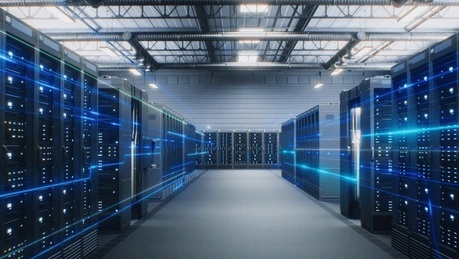
The AI Boom Is Fueling an Unprecedented Data Center Gold Rush
Over the past decade, data centers have quietly become the backbone of the digital world. But with the explosive rise of artificial intelligence, they’re no longer just background infrastructure — they’re now one of the fastest-growing and most strategic assets in modern technology.
From hyperscale cloud providers to regional colocation facilities, data centers are expanding at a pace we’ve never seen before. The reason is simple: AI eats compute, storage, power, and bandwidth — at massive scale.
Why AI Is Driving Data Center Growth
Artificial intelligence workloads are fundamentally different from traditional IT tasks. Training and running large AI models requires:
Specialized hardware like GPUs, TPUs, and AI accelerators
Extreme power density, often several times higher than standard server racks
Low-latency networking for massive parallel processing
Vast storage systems to hold training data and model outputs
As companies race to deploy AI across search, healthcare, finance, manufacturing, and entertainment, the demand for AI-ready infrastructure has skyrocketed.
Hyperscalers such as cloud providers are building enormous facilities measured in hundreds of megawatts, while smaller enterprises are turning to colocation and edge data centers to meet AI needs closer to users.
Power, Cooling, and Location Are Now Strategic Weapons
The AI era has reshaped how data centers are designed and where they are built.
Power availability is often the biggest constraint. Many regions simply can’t deliver enough electricity fast enough.
Advanced cooling solutions — liquid cooling, immersion cooling, and direct-to-chip — are becoming standard for AI racks.
Geographic placement now balances energy costs, climate, fiber connectivity, and regulatory stability.
In some areas, data centers are becoming anchor tenants for renewable energy projects, while in others they’re pushing local grids to their limits.
Economic Impact: Jobs, Investment, and Competition
The data center boom has massive economic ripple effects:
Billions of dollars in construction, equipment, and real estate investment
High-skill jobs in engineering, operations, and cybersecurity
Increased competition among regions and governments to attract facilities
Entire industrial ecosystems are forming around AI infrastructure, from chip manufacturing to cooling technology startups.
What This Means for the Future
AI isn’t slowing down — and neither is data center expansion. As models grow larger and AI becomes embedded in everyday services, data centers will continue to scale both vertically (more power-dense) and horizontally (more locations).
At the same time, efficiency, sustainability, and resilience are becoming just as important as raw compute power.
Pros and Cons of the AI-Driven Data Center Boom
✅ Pros Accelerates AI innovation across industries Creates jobs and economic growth in host regions Drives advances in energy efficiency and cooling technology Improves global digital infrastructure and connectivity Encourages investment in renewable energy sources
❌ Cons Enormous energy consumption can strain local power grids Environmental concerns, especially water usage for cooling High capital costs limit participation to large players Zoning and community resistance in some regions Infrastructure concentration risks if growth outpaces resilience planning
Bottom line: Data centers are no longer just warehouses for servers — they are the physical foundation of the AI revolution. As AI continues to reshape the digital landscape, the growth and evolution of data centers will play a decisive role in determining who leads, who lags, and how sustainable the future of computing really is.